


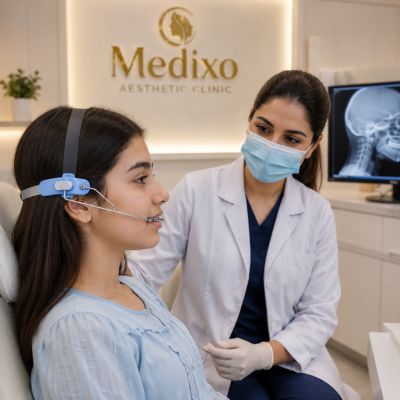
Some bite problems go beyond what braces alone can fix cases where the upper and lower jaws themselves are out of sync, not just the teeth sitting on top of them. For these deeper skeletal discrepancies, an additional appliance is often needed to guide the jaws into better alignment while growth is still underway. Headgear Treatment in Islamabad is exactly this kind of solution, working alongside braces to correct significant overbites, underbites, and jaw discrepancies that regular orthodontic wires can’t fully address on their own.
Quick Facts:
- An orthodontic appliance worn outside the mouth, attached to braces
- Cost typically ranges from Rs. 20,000 to Rs. 60,000
- Most effective in children and teenagers who are still growing
- Usually worn for 12 to 14 hours a day, often overnight
- Treatment duration ranges from several months to over a year
- Several types available, including cervical pull, reverse pull, and combination headgear
- Used alongside braces rather than as a standalone treatment
What Is Headgear Treatment in Islamabad:
Headgear Treatment in Islamabad is a type of orthodontic therapy that uses an external appliance, connected to braces or other dental appliances through straps or wires, to apply gentle, controlled pressure that helps guide jaw growth and correct significant misalignment. Unlike braces, which primarily move individual teeth, headgear works on the position of the jaw itself, making it especially useful for correcting a pronounced overbite, underbite, or excessive spacing that braces alone would struggle to resolve. It’s most effective when used during childhood or adolescence, while the jaw is still developing and more responsive to gentle repositioning.
Why This Treatment Is Sometimes Necessary:
Braces are highly effective at straightening and repositioning individual teeth, but they have limits when the underlying issue involves the jawbone rather than just tooth position. In cases of a significant overbite, where the upper jaw sits noticeably further forward than the lower jaw, or an underbite, where the lower jaw protrudes ahead of the upper, braces alone often can’t correct the skeletal relationship between the two. Headgear steps in to apply steady, external pressure that helps redirect jaw growth during the years when it’s still possible to influence it, making later orthodontic work more effective and sometimes reducing the need for jaw surgery in adulthood.
Types of Headgear Used in Treatment:
Different types of headgear are used depending on the specific bite issue being corrected. Cervical pull headgear attaches at the back of the neck and is typically used to correct an overbite by pulling the upper back teeth backward. Reverse pull headgear, sometimes called a facemask, is worn across the face and is generally used for underbite cases, helping to bring the upper jaw forward. Combination headgear blends elements of both approaches for more complex cases involving multiple alignment issues at once. Your orthodontist will determine which type suits your specific bite pattern after a full examination.
Signs You Might Need This Treatment:
- A noticeably prominent overbite or underbite
- Excessive spacing between teeth that braces alone haven’t resolved
- Significant teeth crowding linked to jaw size discrepancies
- An orthodontist previously recommending headgear alongside braces
- Ongoing jaw growth, typically in children or early teenagers
What Happens During Treatment:
- Initial Evaluation: Your orthodontist examines your bite, jaw alignment, and overall dental structure, often supported by imaging such as a Dental Panoramic X-Ray to assess the full jaw structure.
- Fitting: Braces are typically placed first, if not already in place, with attachments added for the headgear straps or wires to connect to.
- Wear Schedule: You’re given a specific daily wear schedule, generally between 12 and 14 hours, often worn overnight and during quieter parts of the day.
- Progress Monitoring: Regular follow-up visits track how the jaw and bite are responding, with adjustments made as needed.
- Transition to Braces Alone: Once the jaw relationship has improved sufficiently, headgear is typically discontinued while braces continue fine-tuning individual tooth positions.
Adjusting to Wearing Headgear:
It’s completely normal to feel some initial discomfort or self-consciousness when starting headgear, since it involves a visible external appliance and requires wearing it for a significant part of the day. Most patients adapt within the first week or two as the mouth and jaw get used to the light, continuous pressure. Mild soreness, especially after adjustments, is common but typically manageable and temporary. Sticking closely to the recommended wear schedule matters significantly for results, since inconsistent use can slow progress and extend overall treatment time.
Who Is a Good Candidate:
- Children and teenagers with significant overbite, underbite, or jaw discrepancy
- Patients whose jaw is still actively growing, since headgear is most effective during this window
- Those who have already been fitted with braces but need additional correction for the jaw relationship
- Patients and families able to commit to the required daily wear schedule
When This Treatment Isn’t Recommended:
- Adults whose jaw growth has fully completed, where surgical options may be more appropriate instead
- Patients unable to reliably commit to the daily wear schedule needed for results
- Cases where the misalignment is limited to individual teeth rather than jaw positioning
What Determines the Cost of Headgear Treatment in Islamabad:
The cost of Headgear Treatment in Islamabad typically ranges from Rs. 20,000 to Rs. 60,000, depending on several factors. These include the type of headgear appliance used, whether it’s combined with new or existing braces, the severity of the overbite or underbite being corrected, the expected length of treatment, and the orthodontist’s experience. Because headgear is almost always used alongside braces rather than on its own, the total cost is often discussed as part of a broader orthodontic treatment plan rather than as a standalone fee, with the exact figure confirmed after a full consultation.
Long-Term Outlook After Treatment:
Once headgear treatment is complete and braces have finished fine-tuning individual tooth positions, most patients see a significantly improved bite relationship between the upper and lower jaw, along with a straighter, more balanced smile. A retainer is typically recommended afterward to help maintain the corrected position, since teeth and jaws can gradually shift back without ongoing support. Starting treatment early, while the jaw is still developing, generally leads to more stable, lasting results compared to addressing the same issue later in adulthood.
Frequently Asked Questions:
How Much Does Headgear Treatment Cost In Islamabad?
Costs typically range from Rs. 20,000 to Rs. 60,000, depending on the type of appliance, treatment length, and whether it's combined with new braces.
How Many Hours A Day Do I Need To Wear It?
Most patients are advised to wear headgear for 12 to 14 hours a day, often overnight and during quieter periods.
Is Headgear Painful To Wear?
Some initial discomfort or soreness is common, especially after adjustments, but it's generally mild and improves as you adjust over the first week or two.
Can Adults Get Headgear Treatment?
It's most effective in children and teenagers whose jaws are still growing, so adults with significant jaw discrepancies may be better suited to alternative or surgical options.
How Long Does Treatment Typically Take?
Treatment duration varies depending on the severity of the condition, ranging from several months to more than a year of consistent wear alongside braces.
Will I Need Braces Along With Headgear?
Yes. Headgear is almost always used together with braces rather than as a standalone treatment, since braces move the teeth while headgear helps correct jaw positioning.
What Happens If I Don’t Wear It As Recommended?
Inconsistent wear can significantly slow progress and may extend the total treatment time needed to achieve the desired results.
Can Headgear Treatment Avoid The Need For Jaw Surgery Later?
In many cases, starting headgear treatment early while the jaw is still developing can reduce or eliminate the need for jaw surgery in adulthood.
Which Type Of Headgear Will I Need?
The type of headgear depends on your specific bite pattern, whether it's an overbite, underbite, or a combination of both. Your orthodontist will determine the most suitable option after a comprehensive examination.
Why Choose Medixo Aesthetics:
Our orthodontic team carefully evaluates each patient’s bite and jaw structure before recommending headgear, ensuring it’s genuinely necessary rather than a default add-on to braces. Every treatment plan is built around the patient’s specific growth stage and severity of misalignment, with clear guidance on wear schedules and realistic expectations provided from the very first consultation through to final results.
Ready to Correct Your Bite the Right Way:
Book a consultation to find out whether headgear treatment is the right addition to your orthodontic plan.

Dr. Ahmed Ali

We are excited to announce that Dr. Ahmed Ali is now a part of the Glamorous Aesthetic Clinic. We are...
View Profile
Dr. Nadia Tariq
At our clinic we introduce you to our certified and professional Dr Nadia Tariq, a well known plastic and reconstructive...
View Profile
Dr. Fabiha Abid
We proudly introduce you to our certified and highly skilled Dr. Fabiha Abid, a renowned physiotherapist and...
View Profile
Dr. Annas Sani
Introducing Dr. Annas Sani - an expert physician and skilled aesthetician at MedixoAesthetics by...
View Profile
Dr. Mehwish Asad
Introduction: Dr. Mehwish Asad is an Aesthetic and General Surgeon, a motivated and hardworking specialist...
View Profile
Dr. Sabeela Imran
Dental Surgeon (BDS) | PMDC Registered: Dr. Sabeela Imran is a patient-friendly dental surgeon who is passionate...
View Profile