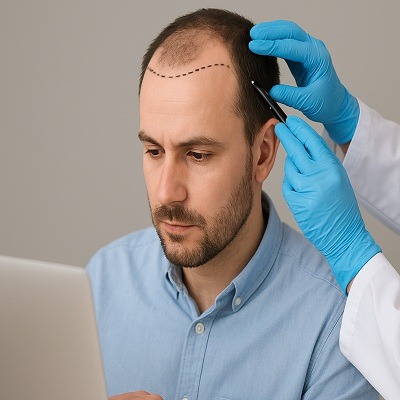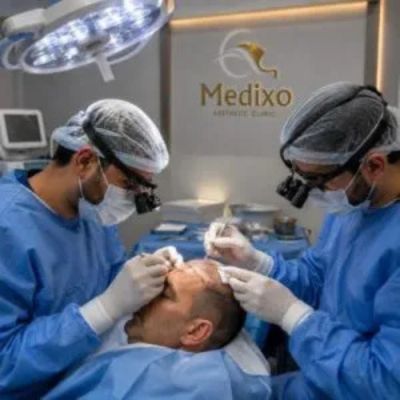
Hair loss can affect your hairline, crown, density and overall appearance, whether it develops gradually or becomes noticeable over time. A hair transplant can restore hair to areas affected by thinning or baldness by relocating hair follicles from a suitable donor area to areas where greater coverage is needed.
At Medixo Aesthetics in Islamabad, hair transplant treatment is planned according to your hair-loss pattern, donor hair availability, scalp condition and restoration goals. Depending on your assessment, available options may include FUE, DHI and FUT hair transplantation.
Your treatment plan should be based on an individual scalp assessment rather than a fixed graft package. During consultation, the hair restoration team can evaluate your donor area, discuss your goals and determine whether a transplant is appropriate for you.
Why Choose Medixo for Hair Transplant in Islamabad?
At Medixo Aesthetics, hair restoration is approached as an individualized treatment rather than a one-size-fits-all procedure.
Depending on your needs and clinical assessment, your treatment plan may include:
- Assessment of your hair-loss pattern and donor area
- Personalized graft planning
- FUE, DHI or FUT options where clinically appropriate
- Hairline and density planning
- Local anesthesia during the procedure
- Post-procedure aftercare guidance
- Follow-up and monitoring during recovery
If you’re experiencing ongoing thinning or aren’t sure whether a transplant is the right option, you can first explore hair loss treatment in Islamabad and discuss your condition with a qualified hair specialist.
What Is a Hair Transplant?
A hair transplant is a surgical hair restoration procedure in which hair follicles are taken from a suitable donor area and transplanted into areas affected by hair loss.
The procedure generally involves three key stages:
- Planning the recipient area
- Harvesting suitable hair follicles from the donor area
- Implanting the follicles into the planned recipient areas
The objective is to restore hair coverage while creating a natural-looking hairline and appropriate density.
However, a hair transplant is not simply about transferring as many grafts as possible. Donor supply, hair characteristics, existing hair, the extent of hair loss and future progression can all influence the treatment plan.
Hair Transplant Techniques Available at Medixo:
FUE Hair Transplant:
Follicular Unit Extraction (FUE) involves harvesting individual follicular units from the donor area and transplanting them into areas affected by hair loss.
FUE can be considered for different patterns of hair loss, including hairline recession and thinning areas, depending on donor availability and individual suitability.
Learn more about FUE hair transplant in Islamabad
DHI Hair Transplant:
Direct Hair Implantation (DHI) is an implantation approach in which harvested follicles are placed into the recipient area using a specialized implantation instrument.
Whether DHI is appropriate depends on the individual’s hair-loss pattern, donor supply, recipient area and treatment goals.
The decision should be made after an assessment rather than assuming that one technique is universally better than another.
FUT Hair Transplant:
Follicular Unit Transplantation (FUT) involves removing a strip of hair-bearing scalp from the donor area and separating it into individual follicular grafts for transplantation.
FUT may be considered in selected cases where the surgeon determines that strip harvesting is appropriate.
Unlike FUE, FUT leaves a linear donor-area scar, so the potential benefits and limitations should be discussed during consultation.
FUSS Hair Transplant:
Follicular Unit Strip Surgery (FUSS) is another strip-based approach to harvesting donor hair. Because FUSS and FUT are closely related techniques, patients should discuss the terminology and treatment approach used by their surgeon during consultation.
For additional information, you can read about FUSS hair transplant
FUE vs DHI vs FUT: Which Hair Transplant Technique Is Right for You:
There isn’t one hair transplant technique that is automatically best for every patient.
| Factor | FUE | DHI | FUT |
|---|---|---|---|
| Donor harvesting | Individual follicular units | Individual follicular units | Strip harvesting |
| Implantation | Grafts placed into prepared recipient sites | Direct implantation approach | Grafts placed into prepared recipient sites |
| Donor-area scarring | Small extraction marks | Small extraction marks | Linear donor scar |
| Suitability | Depends on individual assessment | Depends on individual assessment | Depends on individual assessment |
| Technique selection | Based on patient needs | Based on patient needs | Based on patient needs |
Your surgeon should assess your donor area, hair-loss pattern, recipient area, existing hair and restoration goals before recommending a technique.
Who Is a Good Candidate for Hair Transplant?
A hair transplant may be considered for people experiencing:
- Receding hairline
- Pattern hair loss
- Thinning hair
- Balding areas
- Crown thinning
- Reduced hair density
- Hair loss with an adequate donor area
However, not every type of hair loss requires a transplant.
If your hair loss is caused by an underlying scalp or medical condition, the first step may be identifying and treating the cause. Depending on your condition, non-surgical options may also be considered.
You can learn more about the causes and available options through our hair loss treatment in Islamabad service.
Hair Transplant Consultation in Islamabad:
A consultation is an important part of planning a hair transplant because the number of grafts and the appropriate technique cannot be determined accurately from a generic package alone.
During your consultation, the hair restoration team can assess:
1. Hair-loss pattern:
Your current pattern and extent of hair loss are evaluated.
2. Donor area:
The density and availability of donor hair are considered.
3. Hairline:
The proposed hairline and required coverage are discussed.
4. Graft requirements:
Your estimated graft requirement can be determined according to the areas requiring restoration.
5. Treatment technique:
FUE, DHI, FUT or another suitable approach can be discussed according to your individual case.
6. Recovery and aftercare:
You can also receive information about the recovery period and post-treatment care.
If you’re unsure whether you need a transplant or another hair-loss treatment, a consultation with a trichologist in Islamabad can also help you understand your hair and scalp concerns.
How Many Grafts Do You Need for a Hair Transplant?
The number of grafts required varies from patient to patient.
Your graft requirement may depend on:
- Degree of hair loss
- Size of the treatment area
- Hairline recession
- Crown involvement
- Existing hair density
- Donor-area density
- Hair thickness and characteristics
- Desired coverage
- Long-term hair-loss pattern
A larger graft number is not necessarily better. The objective should be to use the available donor hair strategically while creating an appropriate balance between the hairline, frontal area, mid-scalp and crown.
For this reason, your final graft requirement should be determined after an individual assessment.
Hair Transplant Cost in Islamabad:
The C0st of Hair Transplant in Islamabad can vary because every patient’s treatment plan is different.
Factors that may influence the final cost include:
- Number of grafts required
- Hair transplant technique
- Extent of hair loss
- Donor-area availability
- Treatment complexity
- Clinical assessment
- Aftercare and follow-up requirements
Instead of choosing a clinic based only on the lowest advertised price, consider the treatment plan, clinical assessment, technique, experience and aftercare included with the procedure.
For a more detailed discussion of pricing and the factors that can affect the total cost, visit our dedicated hair transplant cost page.
How Is a Hair Transplant Performed?
Although the exact procedure varies according to the technique selected, hair transplantation generally involves several stages.
Step 1: Consultation and planning
The donor area, hair-loss pattern and recipient areas are assessed.
Step 2: Preparation
The treatment area is prepared according to the selected procedure.
Step 3: Local anesthesia
Local anesthesia is used according to the treatment plan to minimize discomfort during the procedure.
Step 4: Graft harvesting
Hair follicles are harvested using the selected technique.
Step 5: Graft preparation
The harvested follicles are prepared for implantation.
Step 6: Recipient-area preparation
The recipient area is prepared according to the planned hairline and density.
Step 7: Implantation
The prepared grafts are placed into the recipient area.
Step 8: Aftercare
You receive instructions for caring for the treated areas during recovery.
Hair Transplant Recovery Timeline:
Recovery varies according to the technique used and the individual patient.
First few days:
Some patients may experience redness, swelling, tenderness or sensitivity.
First week:
The scalp continues to heal and small scabs or crusting may develop around treated areas.
Weeks 2–4:
Temporary shedding can occur as the transplanted follicles transition through their growth cycle.
Around 3–4 months:
Early new growth may begin to become visible.
6–8 months:
Hair growth and density can become increasingly noticeable.
8–12+ months:
The transplanted hair continues to mature, with the timeline varying between patients.
Your surgeon’s individual aftercare instructions should always take priority over a general recovery timeline.
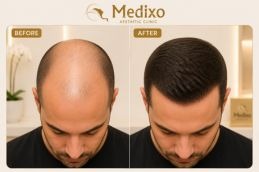
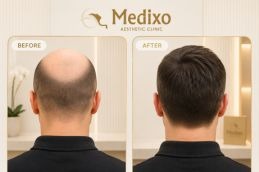
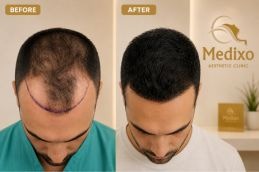
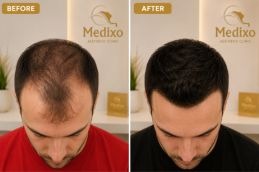
When Will You See Hair Transplant Results:
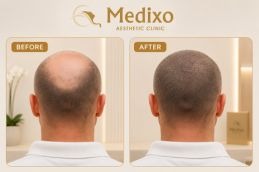
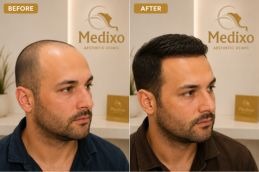
Hair transplant results develop gradually.
The transplanted hair may initially shed before new growth begins. As the follicles enter new growth cycles, hair gradually becomes more visible and continues to mature over subsequent months.
Your outcome can be influenced by:
- Donor hair quality
- Number and quality of grafts
- Hair-loss pattern
- Recipient area
- Healing
- Individual growth response
- Continued loss of non-transplanted hair
For this reason, patients should have realistic expectations and understand that results are not immediate.
Hair Transplant Side Effects and Risks:
Like other surgical procedures, hair transplantation can involve temporary side effects and potential complications.
Possible effects can include:
- Redness
- Swelling
- Tenderness
- Itching
- Scabbing or crusting
- Temporary shedding
- Minor bleeding
- Scarring
- Infection or other complications
Your clinician will provide specific aftercare instructions based on your procedure.
If you experience unexpected or concerning symptoms during recovery, contact your treating medical team.
How Long Does a Hair Transplant Last?
Transplanted follicles are intended to provide long-term hair growth, but the overall appearance of your hair can change over time.
One important consideration is that non-transplanted hair may continue to thin depending on the underlying cause of hair loss.
This is why hair restoration should be considered as part of a longer-term hair-loss management plan rather than simply a one-time procedure.
Hair Transplant vs Non-Surgical Hair Replacement:
Not everyone wants or needs surgical hair restoration.
A hair transplant uses transplanted follicles to restore hair growth, while non-surgical hair replacement provides an alternative approach to improving hair coverage without transplant surgery.
| Hair Transplant | Non-Surgical Hair Replacement | |
|---|---|---|
| Surgery | Yes | No |
| Uses transplanted follicles | Yes | No |
| Donor hair required | Yes | No |
| Approach | Hair restoration using transplanted follicles | Hair replacement/coverage |
| Suitability | Requires suitable donor hair and assessment | Different suitability criteria |
If you’re looking for an alternative to surgery, explore non-surgical hair replacement in Islamabad.
Hair Transplant Cost in Islamabad
The cost of a hair transplant in Islamabad typically ranges from PKR 70,000 to PKR 300,000+. The final price depends on several factors, including the number of grafts required, the hair transplant technique selected, the surgeon’s expertise and the clinic where the procedure is performed.
Per-graft pricing can generally range from approximately PKR 40 to PKR 120, although actual pricing varies between clinics and treatment plans.
Hair Transplant Cost by Number of Grafts
| Number of Grafts | Approximate Cost |
|---|---|
| 1,500 grafts | PKR 70,000 – 115,000 |
| 2,500 grafts | PKR 90,000 – 140,000 |
| 3,000 grafts | PKR 100,000 – 200,000 |
| 4,000–5,000 grafts | PKR 120,000 – 300,000+ |
These figures should be presented as general Islamabad market estimates, not as Medixo’s own fixed prices. Your actual cost depends on your individual treatment plan.
What Affects Hair Transplant Cost in Islamabad?
1. Number of grafts
The greater the area requiring restoration, the more grafts may be needed.
2. Hair transplant technique
Techniques such as FUE, FUT and DHI can have different pricing structures.
3. Surgeon expertise
The experience and qualifications of the treating medical professional can influence the overall treatment cost.
4. Clinic and facilities
Clinic standards, equipment and the services included in treatment can affect pricing.
5. Additional treatment and aftercare
Consultations, prescribed medicines, follow-up appointments and other services may contribute to the overall cost.
How Much Does a Hair Transplant Cost at Medixo:
Your exact Medixo treatment cost should be confirmed after an individual assessment. The number of grafts and appropriate technique should be determined according to your hair-loss pattern and donor area rather than selecting a package based solely on price.
For a detailed breakdown, users can learn more about hair transplant cost in Islamabad.
Why Choose the Right Hair Transplant Clinic?
A hair transplant is a medical procedure, so the decision should not be based solely on price.
When comparing hair transplant clinics in Islamabad, consider:
- Who performs the procedure
- Medical qualifications and experience
- How donor hair is assessed
- How graft requirements are determined
- Whether the hairline is individually planned
- Which techniques are available
- What aftercare is provided
- Whether genuine patient results are available
- Whether realistic expectations are discussed before treatment
At Medixo, your consultation should focus on understanding your hair-loss pattern and developing a treatment plan appropriate to your individual needs.
Frequently Asked Questions About Hair Transplant In Islamabad:
Which Technique Is Better FUE, FUT, Or DHI?
None is universally "better." The right choice depends on your baldness stage, donor hair density, and scalp elasticity, which your surgeon evaluates during consultation.
Is A Hair Transplant Painful?
The procedure is performed under local anesthesia, so pain during surgery is minimal. Mild discomfort afterward is manageable with prescribed medication.
How Long Do Results Take To Show?
New growth typically begins around 3–4 months, with final, mature results visible between 8 and 12 months.
Is Transplanted Hair Permanent?
Yes. Transplanted follicles are typically resistant to further hair loss, making results long-lasting with proper aftercare.
Is It Normal For Transplanted Hair To Shed After Surgery?
Yes. Temporary shedding around 2–4 weeks is a normal part of the hair growth cycle and not a sign of failure.
How Many Grafts Will I Need?
This depends on your baldness stage and desired density, ranging from around 1,500 grafts for minor thinning to 5,000+ grafts for extensive coverage.
What Is The Recovery Time?
Most patients return to routine activities within 7–12 days, though strenuous exercise should be avoided for about 2 weeks.
Can Women Undergo A Hair Transplant?
Yes. Women experiencing pattern hair loss, traction alopecia, or hair thinning with a healthy donor area may be suitable candidates after a detailed scalp evaluation.
Can I Wear A Cap After A Hair Transplant?
It is generally recommended to avoid wearing a cap for the first few days after surgery. Your surgeon will advise when it is safe to wear one without affecting the newly transplanted graf