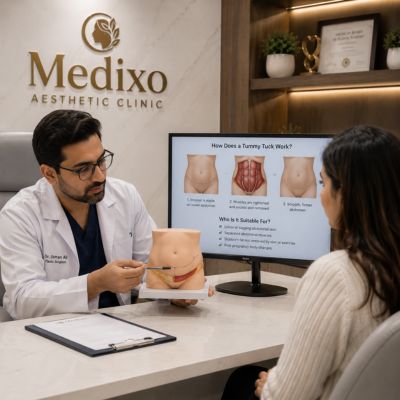


Loose skin and stubborn belly fat after pregnancy or major weight loss can feel impossible to shift, no matter how consistent your diet or workouts are. Many patients researching their options end up asking the same two questions: How does a tummy tuck work, and who is it suitable for? This guide answers both in simple, practical terms.
Quick Facts:
- Procedure Name: Abdominoplasty (Tummy Tuck)
- Cost Range: Rs. 150,000 – Rs. 550,000
- Anesthesia: General Anesthesia
- Surgery Duration: Approximately 2–4 Hours
- Procedure: Removes Excess Skin and Tightens Weakened Abdominal Muscles
- Ideal Candidates: Patients at or Near a Stable Body Weight
- Recovery Time: Approximately 2–4 Weeks
- Final Results: Fully Visible Within 3–6 Months
- Purpose: Body Contouring Procedure, Not a Weight-Loss Treatment
- Additional Option: Commonly Combined with Liposuction for Enhanced Body Contouring
How Does A Tummy Tuck Works:
A tummy tuck, medically known as abdominoplasty, works by removing excess skin and fat from the abdomen while tightening the underlying muscles. During surgery, the surgeon makes a low incision, repairs any separated abdominal muscles, trims away loose skin, and repositions the remaining skin for a firmer, flatter result. It doesn’t remove large volumes of fat the way liposuction does, which is why the two procedures are often combined for more complete contouring.
The Procedure Step by Step:
The surgery begins with general anesthesia to keep the patient fully comfortable throughout. A surgeon then makes a horizontal incision low on the abdomen, through which separated muscles are stitched back together. Excess skin is trimmed away, and the remaining skin is pulled taut and repositioned. In many cases, the belly button is also repositioned to sit naturally on the newly contoured abdomen.
Who Is It Suitable For:
A tummy tuck is generally suitable for patients with loose abdominal skin that hasn’t responded to diet or exercise, often following pregnancy or significant weight loss. It works best for those who are close to a stable, healthy weight rather than still actively losing weight. Good candidates are also in generally good health, with no uncontrolled medical conditions that could affect healing. It’s not recommended for patients planning future pregnancies, since a later pregnancy can affect the repaired muscles.
Who Should Consider Other Options First:
- Patients still planning significant future weight loss
- Those considering pregnancy in the near future
- Patients whose main concern is fat rather than loose skin, who may benefit more from Liposuction
- Anyone with unmanaged chronic health conditions
How It’s Different From Liposuction:
Many patients wonder whether liposuction alone could achieve similar results. Liposuction removes fat but doesn’t address loose or sagging skin, which is where a tummy tuck comes in. For patients dealing with both excess fat and loose skin, the two procedures are frequently combined in a single surgery, giving a fuller, more complete transformation than either treatment alone.
What Recovery Actually Looks Like:
Most patients spend the first week resting with limited movement, gradually increasing activity as swelling subsides. Light walking is usually encouraged early on to support circulation and reduce the risk of blood clots. Strenuous activity and heavy lifting are typically avoided for around 6 to 8 weeks. Full, settled results are generally visible by 3 to 6 months after surgery.
What Determines the Cost:
The cost of a tummy tuck in Islamabad typically ranges from Rs. 150,000 to Rs. 550,000, depending on the extent of correction needed. Key factors include whether it’s a mini, full, or extended procedure, whether liposuction is combined in the same session, and the surgeon’s experience. For a full breakdown of pricing by procedure type, our detailed Tummy Tuck page covers cost by category in more depth.
Combining With Other Procedures:
Many patients choose to pair a tummy tuck with other body-contouring treatments during the same recovery period. This is especially common for patients also interested in broader Body Contouring, since addressing multiple areas together can reduce overall downtime compared to spacing out separate surgeries.
Frequently Asked Questions:
Who Is A Good Candidate For A Tummy Tuck?
Good candidates have loose abdominal skin, are at a stable weight, and are in generally good health with no plans for future pregnancy.
How Much Does It Cost In Islamabad?
Costs typically range from Rs. 150,000 to Rs. 550,000, depending on the extent of correction and whether liposuction is combined.
Is A Tummy Tuck The Same As Liposuction?
No. Liposuction removes fat, while a tummy tuck also removes excess skin and repairs separated abdominal muscles.
How Long Is Recovery?
Most patients need about 2 to 4 weeks before returning to routine activities, with final results continuing to improve over 3 to 6 months.
Can I Get Pregnant After A Tummy Tuck?
Yes. However, surgeons generally recommend completing your family before undergoing a tummy tuck, as pregnancy can stretch the repaired muscles and affect the results.
Will I Need Liposuction Too?
Not always. Many patients choose to combine liposuction with a tummy tuck for more comprehensive body contouring in a single recovery period.
Is The Surgery Painful?
Some discomfort is expected during the first week, but it is usually well managed with prescribed pain medication and gradually improves during recovery.
Will There Be Visible Scarring?
Yes. A scar remains along the lower abdomen, but it is carefully placed so it can usually be concealed beneath underwear or swimwear.
Who Should Avoid This Procedure?
Patients planning future pregnancies, significant weight loss, or those with uncontrolled medical conditions should discuss alternative options with their surgeon before proceeding.
Why Choose Medixo Aesthetics:
Our surgical team takes time to assess whether a tummy tuck alone, or combined with another procedure, is the right fit for your specific goals. Every treatment plan is built around your body, your recovery needs, and realistic expectations from consultation through to final results.
Ready to Learn More About Your Options:
A tummy tuck works by removing excess abdominal skin and fat while tightening the underlying muscles, giving patients a firmer, flatter stomach that diet and exercise alone often can’t achieve. It’s best suited for people at a stable weight who are dealing with loose skin, most often after pregnancy or significant weight loss, rather than those still trying to lose fat. With realistic expectations, proper recovery time, and the right surgeon, it can be a lasting solution for restoring a more confident, contoured abdomen.