


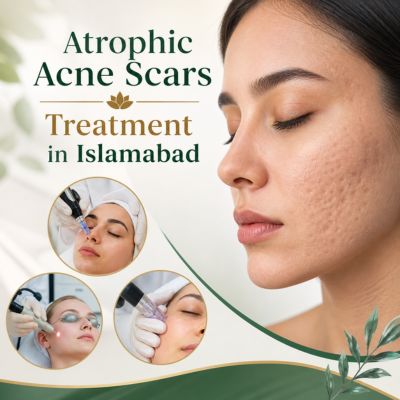


You’re not alone. Atrophic Acne Scars in Islamabad affect millions of people across Pakistan, and in Islamabad, demand for effective treatments has never been higher. The good news? In 2026, there are proven, dermatologist-led treatments that can dramatically reduce — and in many cases nearly eliminate — atrophic scars.But here’s what most blogs won’t tell you: not all atrophic scars are the same, and the wrong treatment for your scar type wastes your money and your time.
Quick Facts:
- Atrophic scars are permanent without medical treatment—topical creams can’t fix them.
- There are three main types: ice pick, boxcar, and rolling scars.
- TCA CROSS is the most effective option for deep ice pick scars.
- Subcision is essential for releasing tethered rolling scars.
- Fractional CO2 laser works best for boxcar and mixed scars.
- Most patients need a combination of treatments, not just one.
- Visible improvement usually takes 3–6 months, not a single session.
- SPF 50 sunscreen is mandatory after every procedure.
What Are Atrophic Acne Scars?
Atrophic scars are depressed scars — they sit below the surface of your skin. They form when your body doesn’t produce enough collagen during the healing process after a deep or inflamed pimple. The result is a small pit or hollow left in the skin.
Recovery and Results Timeline:
Every treatment has a different recovery period. Here’s a realistic overview:
- TCA CROSS: Mild scabbing at treated spots lasting 5–7 days. Redness fades within 1–2 weeks. Results build over 4–8 weeks per session.
- Fractional CO2 Laser: 3–5 days of redness and swelling. Skin feels rough or dry for up to a week. Avoid sun entirely for 2 weeks. Results improve progressively over 3–6 months as new collagen forms.
- Subcision + PRP: Bruising and mild swelling for 3–5 days. Skin looks normal within a week. Lifting effect becomes visible over 4–8 weeks.
- Microneedling RF: Mild redness for 24–48 hours. Minimal downtime. Results develop gradually over 3–4 months.
- Dermal Fillers: Immediate improvement. Mild swelling for 1–2 days. No significant downtime.The most important rule across all treatments: wear SPF 50 every single day without exception. Sun protection is not optional after atrophic scar treatment — it is the single most important factor in preventing PIH and preserving your results.
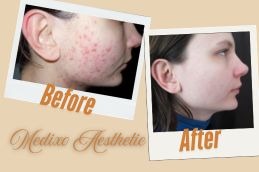
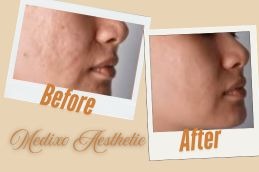
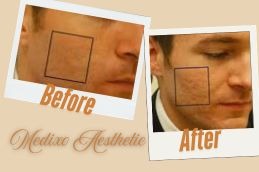
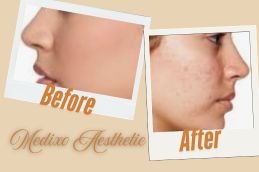
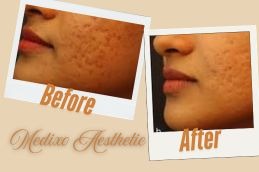
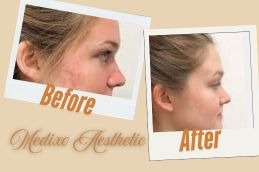
Types of Atrophic Acne Scars Treatment:
There are three main types of atrophic acne scars, and each one behaves differently and needs a different treatment approach.
Ice Pick Scars — Deep and Narrow:
Ice pick scars are deep, narrow holes that look like small puncture marks in the skin. They are the hardest type to treat because they extend deep into the dermis — the lower layer of skin. The opening at the surface is small, but the channel below goes surprisingly deep.
Superficial treatments like light chemical peels or basic microneedling will not reach them. You need targeted, precise treatments for ice pick scars.
Boxcar Scars — Wide with Sharp Edges:
Boxcar scars are broader depressions with clearly defined, sharp edges. They look similar to the Scars left by chickenpox. They tend to appear on the cheeks and temples. Because of their width, they respond well to resurfacing treatments that can smooth out the edges and encourage collagen to fill in the base.
Rolling Scars — Wave-Like and Uneven:
Rolling scars give the skin a wavy, uneven texture. They are caused by fibrous bands of tissue that form under the skin and pull it downward from below. This “tethering” effect creates the rolling appearance. Rolling scars are best treated by breaking those bands — not just resurfacing the top of the skin.
Why Atrophic Scars Are Different?
Atrophic scars are a structural problem. The tissue beneath your skin is damaged or missing. This is a critical point because it means no cream, serum, or home remedy can physically fill that gap. Collagen has to be rebuilt from within.
Why Home Remedies Don’t Work for Atrophic Scars?
Lemon juice, aloe vera, turmeric, and over-the-counter scar creams are popular in Pakistan — but they simply cannot treat structural scars. These products can improve surface pigmentation slightly, but they cannot rebuild the dermis or fill a physical hole in your skin. Using harsh DIY ingredients like lemon juice can also trigger PIH in darker skin tones, making things worse.
Professional treatments are the only clinically proven path to improving atrophic scars.
Best Treatments for Atrophic Acne Scars in Islamabad?
Here is where most guides fail you. They list every possible treatment without telling you which scar type each one works best for. We’ll fix that here.
TCA CROSS — Best for Ice Pick Scars:
TCA CROSS (Trichloroacetic Acid Chemical Reconstruction of Skin Scars) is a targeted technique where a high-concentration TCA solution is applied precisely into each ice pick scar using a fine applicator. It triggers a controlled wound response deep inside the scar channel, stimulating new collagen to form from the bottom up.
It is currently one of the most effective treatments for ice pick scars available in Islamabad. Results develop over 4–8 weeks per session, and most patients need 3–6 sessions spaced 4–6 weeks apart. It’s relatively low-cost per session and well-tolerated in Pakistani skin tones when performed correctly.
- Best for: Ice pick scars
- Sessions needed: 3–6
- Cost in Islamabad: PKR 8,000–15,000 per session
Fractional CO2 Laser — Best for Boxcar and Mixed Scars:
Fractional CO2 laser is considered the gold standard for boxcar scars and moderate-to-severe mixed atrophic scarring. It works by creating thousands of tiny columns of controlled heat in the skin, destroying damaged tissue and stimulating deep collagen remodelling. The surrounding skin heals these micro-zones quickly, replacing old scarred tissue with fresher, smoother skin.
The key word for Pakistani patients is fractional — this means only a fraction of the skin is treated at one time, reducing downtime and the risk of PIH. Your dermatologist should use conservative settings and pair the treatment with a skin-prepping routine (retinoids or hydroquinone) before the procedure to protect your melanin.
- Best for: Boxcar scars, shallow-to-moderate rolling scars
- Sessions needed: 2–4
- Cost in Islamabad: PKR 15,000–35,000 per session
Subcision + PRP — Best for Rolling Scars:
Subcision is a minor procedure where a fine needle is inserted under the skin and moved sideways to physically cut the fibrous bands causing rolling scars. Once the bands are released, the depressed skin lifts naturally. PRP (Platelet-Rich Plasma — drawn from your own blood) is then injected into the area to accelerate healing and stimulate collagen growth.
This combination is highly effective for rolling scars and is safe for Pakistani skin tones because it doesn’t involve heat or aggressive resurfacing. Expect some bruising and mild swelling for a few days.
- Best for: Rolling scars
- Sessions needed: 2–4
- Cost in Islamabad: PKR 15,000–30,000 per session (combined)
Microneedling RF:
Radiofrequency microneedling devices like Morpheus8 and the Scarlet device use tiny needles that deliver RF energy directly into the deep dermis. This stimulates collagen and elastin production without heating the surface of the skin — making it significantly safer for darker skin tones than standard laser.
It is an excellent all-rounder treatment that improves overall skin texture, reduces shallow scars, and tightens skin. It works well as a standalone treatment for mild-to-moderate scarring or as a complementary step in a combination protocol.
- Best for: Mixed texture, shallow boxcar, post-acne roughness
- Sessions needed: 3–5
- Cost in Islamabad: PKR 20,000–40,000 per session
Dermal Fillers — Instant Lifting for Deep Depressions:
For patients with isolated deep atrophic scars — particularly wider boxcar or deep rolling scars — hyaluronic acid-based Dermal Fillers can be injected directly under the scar to physically lift and smooth the surface. Results are immediate.
The limitation is that fillers are temporary. Results typically last 6–18 months depending on the filler type. They are best used as a quick improvement option or in combination with collagen-stimulating treatments that provide longer-lasting structural change.
- Best for: Deep isolated depressions, wide boxcar scars
- Cost in Islamabad: PKR 25,000–60,000 depending on filler type
Combination Therapy — Why One Treatment Is Never Enough:
The most important thing a qualified dermatologist in Islamabad will tell you is this: atrophic acne scars almost always need a combination of treatments to achieve meaningful improvement.
Here’s a sample protocol that experienced clinics use:
| Week | Treatment |
|---|---|
| Week 1 | Consultation + skin prep (retinoids + SPF) |
| Week 4 | Subcision + PRP (rolling scars) |
| Week 8 | TCA CROSS (ice pick scars) |
| Week 12 | Fractional CO2 laser or Microneedling RF |
| Week 16–20 | Repeat based on progress |
The sequence matters. Subcision is done first because releasing tethered bands makes the skin more receptive to resurfacing treatments later. TCA CROSS and laser should not be performed on active inflammation. Skin prepping with retinoids before laser reduces PIH risk significantly.
Always ask your dermatologist for a written treatment plan with a timeline before you commit.
Cost of Atrophic Acne Scar Treatment in Islamabad:
Here’s a realistic cost breakdown per treatment type:
| Treatment | Cost per Session (PKR) | Sessions Needed | Total Estimate (PKR) |
|---|---|---|---|
| TCA CROSS | 8,000–15,000 | 3–6 | 24,000–90,000 |
| Fractional CO2 Laser | 15,000–35,000 | 2–4 | 30,000–140,000 |
| Subcision + PRP | 15,000–30,000 | 2–4 | 30,000–120,000 |
| Microneedling RF | 20,000–40,000 | 3–5 | 60,000–200,000 |
| Dermal Fillers | 25,000–60,000 | 1–2 | 25,000–120,000 |
Prices vary depending on the clinic’s location and equipment, the severity of your scarring, the number of areas treated, and the dermatologist’s experience. A full combination protocol typically costs between PKR 80,000–250,000 over 3–6 months. While that may sound like a lot, consider that untreated atrophic scars are permanent — and effective treatment produces results that last years with proper skincare.
Book your Appointment:
Start your personalised acne scar treatment journey at Medixo Clinic with expert dermatologists who understand Pakistani skin. Book your consultation today and take the first step toward smoother, clearer skin.
Frequently Asked Questions:
What are The Types of Atrophic Acne Scars?
The three main types are ice pick scars (deep and narrow), boxcar scars (wide with sharp edges), and rolling scars (wave-like and uneven).
Can Atrophic Acne Scars be Permanently Removed?
They cannot be fully erased, but expert combination treatments in Islamabad can reduce their visibility by up to 80%
What is The Best Treatment For Atrophic Acne Scars in Islamabad?
The best approach is a combination protocol — TCA CROSS for ice pick scars, fractional CO2 laser for boxcar scars, and subcision with PRP for rolling scars.
Is CO2 Laser Safe for Pakistani Skin?
Yes — when performed by an experienced dermatologist using conservative fractional settings designed specifically for Fitzpatrick IV–V skin tones.
What is TCA CROSS Treatment?
TCA CROSS is a precise technique where high-concentration trichloroacetic acid is applied directly inside each ice pick scar to stimulate deep collagen regrowth.
How Many Sessions Are Needed To Treat Atrophic Acne Scars?
Most patients need 3–6 sessions depending on scar type, depth, and the combination of treatments used.
How Much Does Atrophic Acne Scar Treatment Cost in Islamabad?
Costs range from PKR 8,000 per TCA CROSS session to PKR 40,000 per microneedling RF session, with full protocols typically ranging PKR 80,000–250,000.
Can Home Remedies Remove Atrophic Acne Scars?
No — creams, lemon juice, and aloe vera cannot rebuild lost collagen or fill structural skin depressions; only professional dermatological treatments can achieve real improvement.

Dr. Ahmed Ali

We are excited to announce that Dr. Ahmed Ali is now a part of the Glamorous Aesthetic Clinic. We are...
View Profile
Dr. Nadia Tariq
At our clinic we introduce you to our certified and professional Dr Nadia Tariq, a well known plastic and reconstructive...
View Profile
Dr. Fabiha Abid
We proudly introduce you to our certified and highly skilled Dr. Fabiha Abid, a renowned physiotherapist and...
View Profile
Dr. Annas Sani
Introducing Dr. Annas Sani - an expert physician and skilled aesthetician at MedixoAesthetics by...
View Profile
Dr. Mehwish Asad
Introduction: Dr. Mehwish Asad is an Aesthetic and General Surgeon, a motivated and hardworking specialist...
View Profile
Dr. Sabeela Imran
Dental Surgeon (BDS) | PMDC Registered: Dr. Sabeela Imran is a patient-friendly dental surgeon who is passionate...
View Profile


